Rock and roll has always flirted with the body as a weapon, a tool of rebellion, seduction, and spectacle. But for a handful of hard rock and metal musicians, that flirtation crossed into full exposure, sometimes by choice, sometimes under pressure, and occasionally in service of something larger than themselves. From Playgirl centerfolds to Lollapalooza stages, the stories behind these moments are rarely as simple as they appear. What follows is a look at eight artists who bared it all—and the very different reasons, reactions, and regrets that followed.
Peter Steele (Type O Negative)
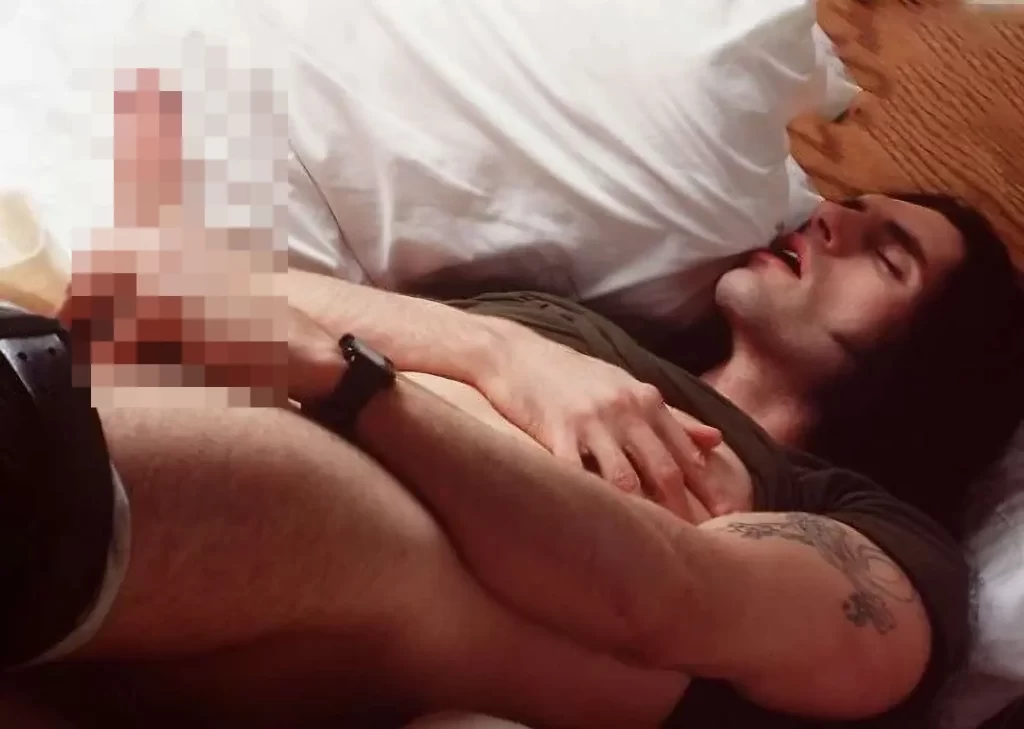
Peter Steele of Type-O Negative nude and at attention in Playgirl Magazine 1995
Era / Genre: Gothic/Industrial Metal; mid-1990s
Career Context at the Time:
Type O Negative were cult heroes crossing into broader visibility. Steele’s imposing presence and dark-humored, morbid persona were central to the band’s appeal.
What Happened:
In 1995, Peter Steele appeared as a nude centerfold in Playgirl magazine. The spread presented him in the magazine’s typical erotic style, explicitly positioning him as an object of desire.
Agency & Intent:
Steele agreed to the shoot, but later described it as a mistake. He has been quoted and paraphrased in fan recountings as saying he underestimated the audience and impact, expecting a female readership and discovering that much of Playgirl‘s core audience was gay men. The decision appears artist-driven at the time, but with only partial understanding of the ramifications.
Public & Industry Reaction:
In metal circles, the centerfold became part of his legend—simultaneously a joke, a boast, and a bit of “what was he thinking?” curiosity. It did not trigger moral panic; the gothic/industrial scene was already tolerant of sexual provocation.
Career Impact:
The images have lingered as trivia and meme fodder, occasionally overshadowing the music in fan discourse, but did not fundamentally alter the band’s trajectory. Steele’s later regret underscores how an authorized act can age very differently than expected.
Notes / Clarifications:
This is a clear case of authorized magazine nudity that the artist later came to regret, illustrating the difference between consent in the moment and long-term comfort with an image.
Stephen Pearcy (Ratt)
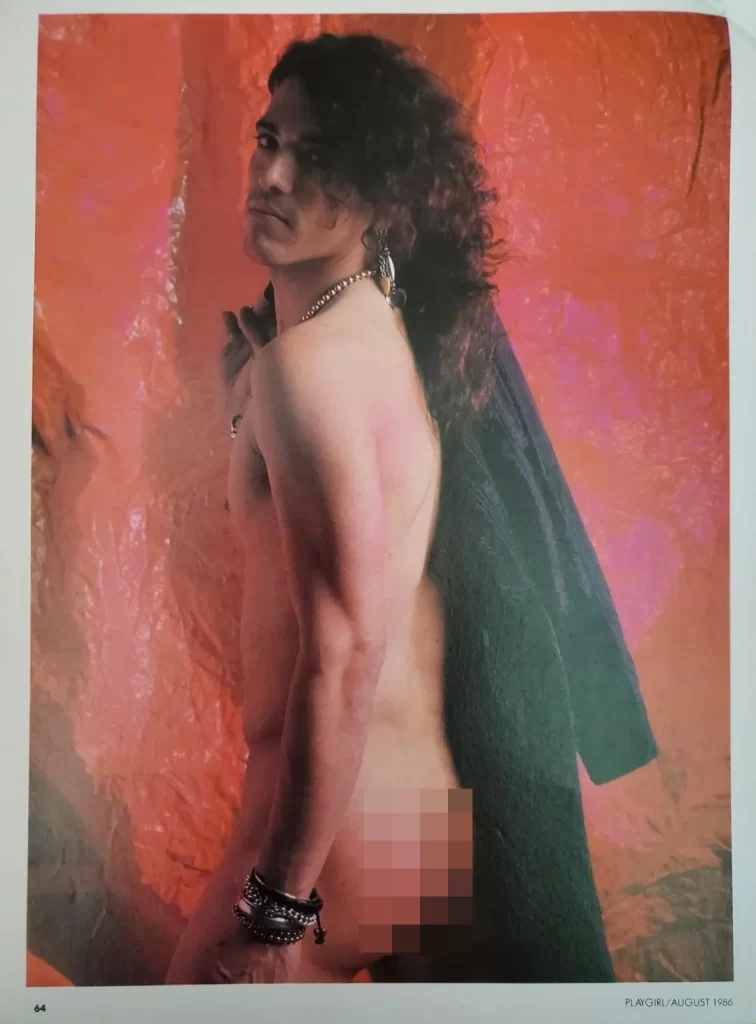
Ratt frontman Stephen Pearcy nude in Playgirl Magazine August 1986
Era / Genre: Hair Metal; mid-1980s
Career Context at the Time:
Ratt were riding the crest of the mid-’80s L.A. metal wave. Pearcy was a recognizable MTV-era frontman, his sexuality already part of the band’s sales pitch.
What Happened:
Stephen Pearcy posed for Playgirl in the August 1986 issue. The spread was partially nude rather than fully explicit—he left “something to the imagination,” as he later put it.
Agency & Intent:
In a contemporaneous Rockline interview and later recollections, Pearcy explained he accepted the shoot partly to answer persistent “sock in the pants” rumors about him. Ironically, by not going fully explicit, he both addressed and reinforced those rumors. The decision was clearly his, framed as pushback against gossip and as a brand-consistent stunt.
Public & Industry Reaction:
Within hair metal circles, the Playgirl appearance was more of a wink than a scandal. Fans were already accustomed to hyper-sexual imagery; a semi-nude shoot fit the climate.
Career Impact:
The spread became a minor but enduring part of Pearcy’s personal mythology. It neither boosted nor harmed Ratt’s commercial fortunes in a measurable way.
Notes / Clarifications:
Authorized, but comparatively mild by later standards—and instructive as an early male “objectification” moment in hair metal.
Bret Michaels (Poison)
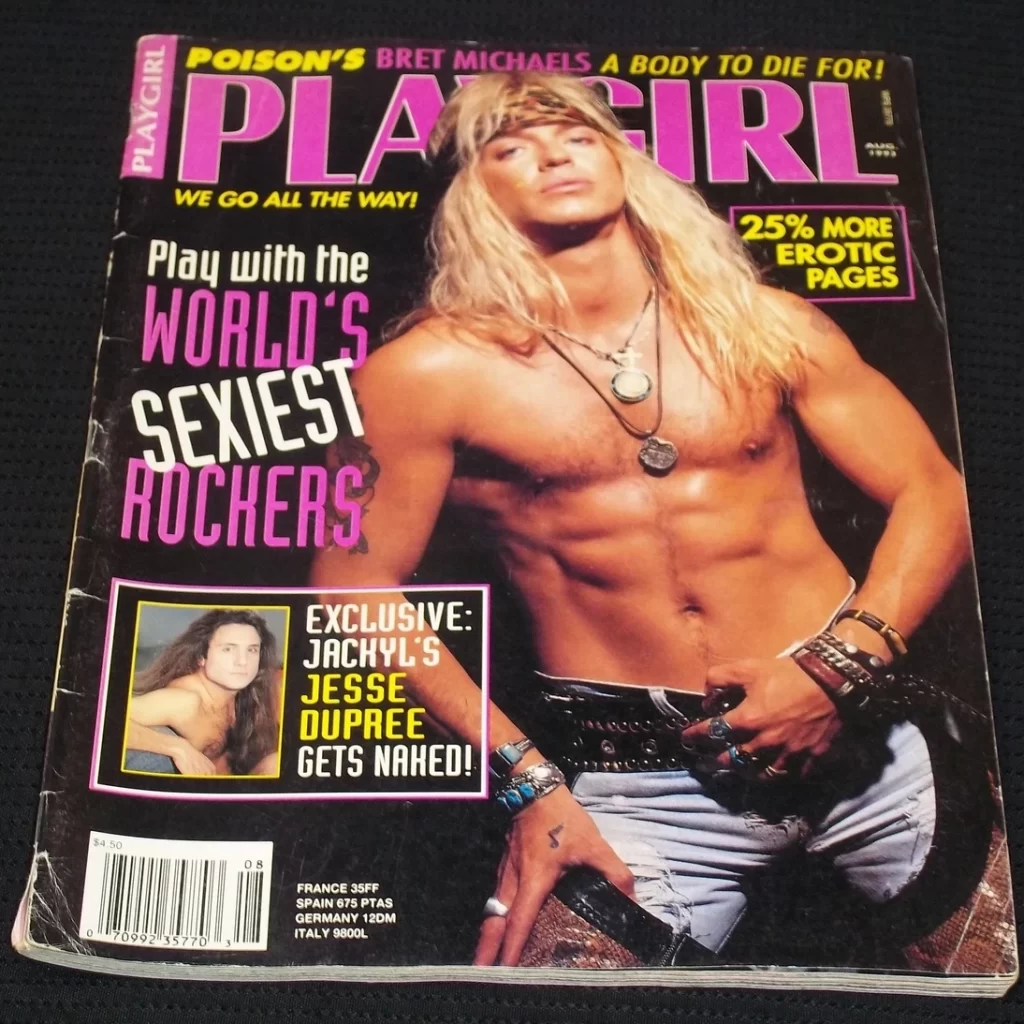
August 1993 issue of Playgirl Magazine showing Bret Michaels of Poison
Era / Genre: Hair Metal; early 1990s
Career Context at the Time:
Poison were still high-profile MTV staples, though hair metal as a whole was about to be sideswiped by grunge.
What Happened:
Bret Michaels appeared in Playgirl‘s August 1993 issue as a featured centerfold. Contemporary collectors and promotional material identify the issue as containing nude images of Michaels.
Agency & Intent:
Michaels’ participation appears to have been fully voluntary and consistent with his glam Casanova image. The decision fit both his personal brand and the genre’s leather-and-lipgloss ethos.
Public & Industry Reaction:
The reaction was more amused than outraged—yet another example of hair metal’s cheeky sexuality. Among fans, the centerfold cemented his status as a poster-boy sex symbol.
Career Impact:
The appearance did not substantially alter his trajectory; Poison’s decline had more to do with shifting musical trends than with Playgirl. It remains a notable footnote rather than a defining event, especially as Michaels has gone on to pose with even less clothing in Billboard, Hit Parader, and photographer Blair Bunting.
Kip Winger (Winger)
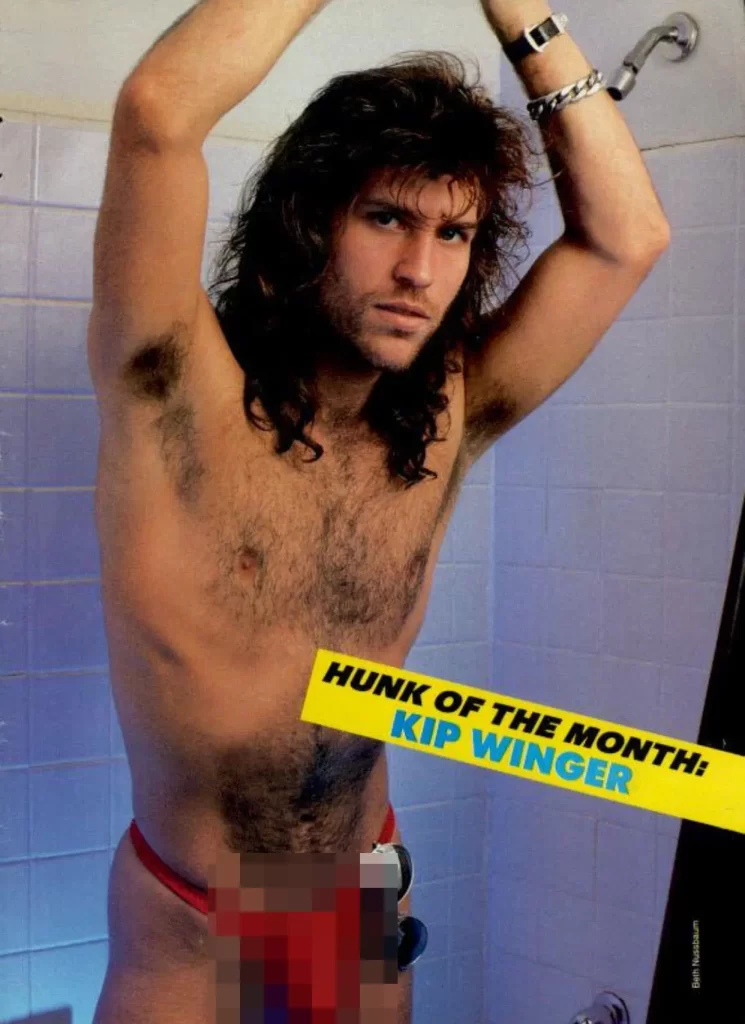
Hunk of the Month: Kip Winger of the band Winger
Era / Genre: Hair Metal; early 1990s
Career Context at the Time:
Winger were commercially successful but already seen as emblematic of what grunge fans derided about hair metal—polished, pretty, and allegedly lightweight.
What Happened:
Kip Winger appeared in Playgirl‘s May 1991 issue in a fashion-oriented pictorial. Critically, he was not fully nude; the spread emphasized styled outfits and suggestive poses.
Agency & Intent:
Winger has said in interviews that his publicist pushed him into doing the shoot, citing Steven Tyler’s prior Playgirl involvement as precedent. His manager Bill Aucoin (formerly of KISS) reportedly objected that the Playgirl brand was “not rock and roll.” Winger has since expressed discomfort and a sense that this decision did not align with his self-image as a rock musician.
Public & Industry Reaction:
The shoot reinforced perceptions of Winger as a “pretty boy band” but generated little controversy beyond mild snickering.
Career Impact:
It became yet another data point in the “Winger as eye-candy” narrative, which arguably made the band an easier target for the cultural backlash that followed. Winger’s own later criticism of the decision highlights the tension between PR strategy and artist identity.
Notes / Clarifications:
This is a borderline case: authorized, but not fully nude, and one the artist now frames as a misstep.
Jesse James Dupree (Jackyl)
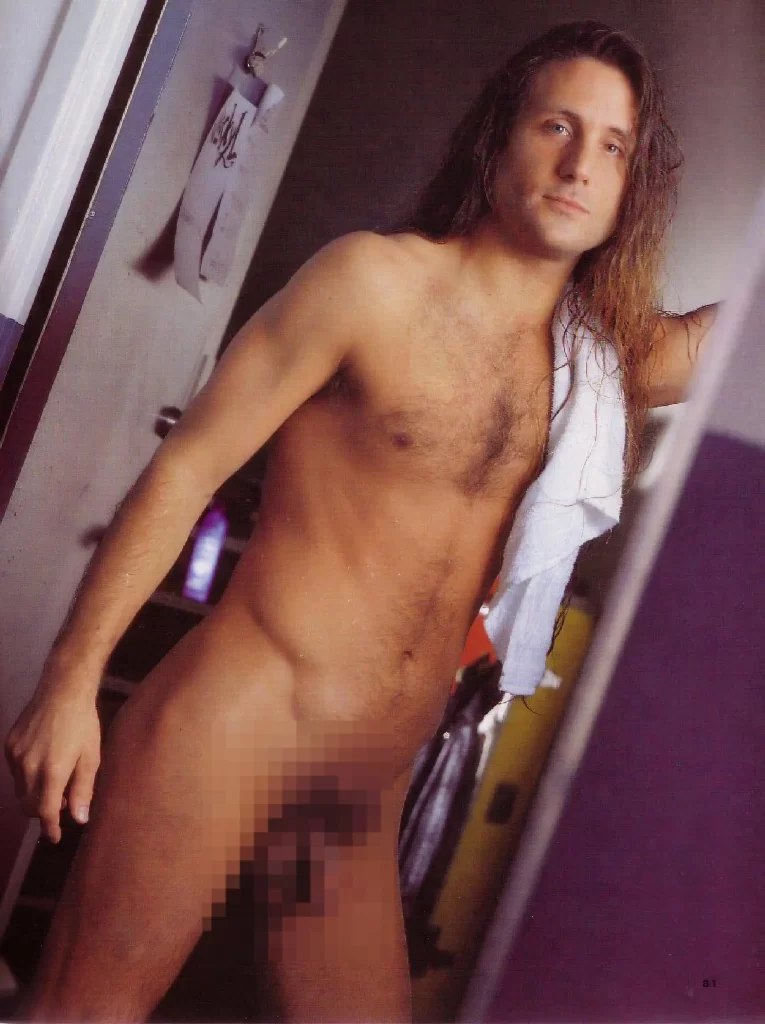
Jesse James Dupree of Jackyl fully nude in Playgirl Magazine August 1993
Era / Genre: Southern/Heavy Metal; early 1990s
Career Context at the Time:
Jackyl were emerging as a barroom metal act known for chainsaw solos and crude humor. Dupree’s onstage persona was built on blue-collar excess.
What Happened:
Jesse James Dupree appeared nude in the August 1993 Playgirl issue alongside Bret Michaels. Collectors and listings identify him as a fully nude centerfold, more explicit than many rock contemporaries.
Agency & Intent:
Consistent with his image, Dupree evidently embraced the stunt as part of Jackyl’s shock-and-awe approach. The appearance fit the band’s “let’s offend the neighbors” ethos.
Public & Industry Reaction:
Attention was modest; Jackyl never achieved Poison-like ubiquity. Within fan circles, the spread reinforced Dupree’s anything-goes reputation.
Career Impact:
The Playgirl shoot is a colorful bit of Jackyl lore but not a major career inflection point.
Nikki Sixx (Mötley Crüe)
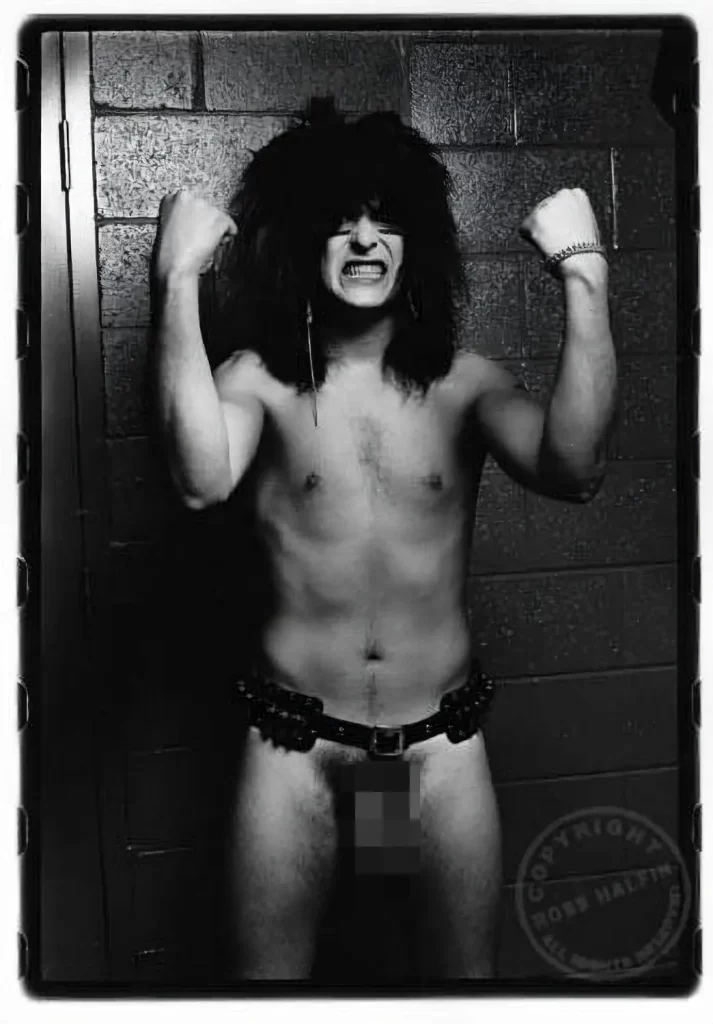
Nikki Sixx of Motley Crue naked except for an ammunition belt. Photo by Ross Halfin
Era / Genre: Hair Metal; 1980s–2010s
Career Context at the Time:
As Mötley Crüe’s bassist and primary songwriter, Sixx was central to the band’s “sex, drugs, and rock ‘n’ roll” image.
What Happened:
There are two relevant threads:
- Early-’80s magazine imagery: Fans and forum posts reference at least one early metal-magazine photo spread with nude or semi-nude images of Sixx, though concrete issue details are sparse.
- 2011 Facebook incident: In March 2011, Sixx posted artistic nude photographs of himself (full frontal) on Facebook. The platform quickly removed them for violating nudity policies, prompting Sixx to publicly criticize Facebook’s inconsistency and argue the images were art.
Agency & Intent:
The 2011 photos were clearly artist-driven and intentionally provocative, aligning with Sixx’s long-standing habit of pushing boundaries and his later work as a photographer and author.
Public & Industry Reaction:
Media coverage focused on censorship and double standards (especially compared to more lenient treatment of violent imagery), rather than on the nudity itself. For longtime fans, it was entirely on-brand.
Career Impact:
Negligible; the incident became minor modern-era lore in a career already saturated with scandal.
Notes / Clarifications:
Unlike a magazine centerfold, Sixx’s 2011 images were self-published and then removed—authorized by him, but not vetted or framed by an editorial institution.
Flea (Red Hot Chili Peppers)
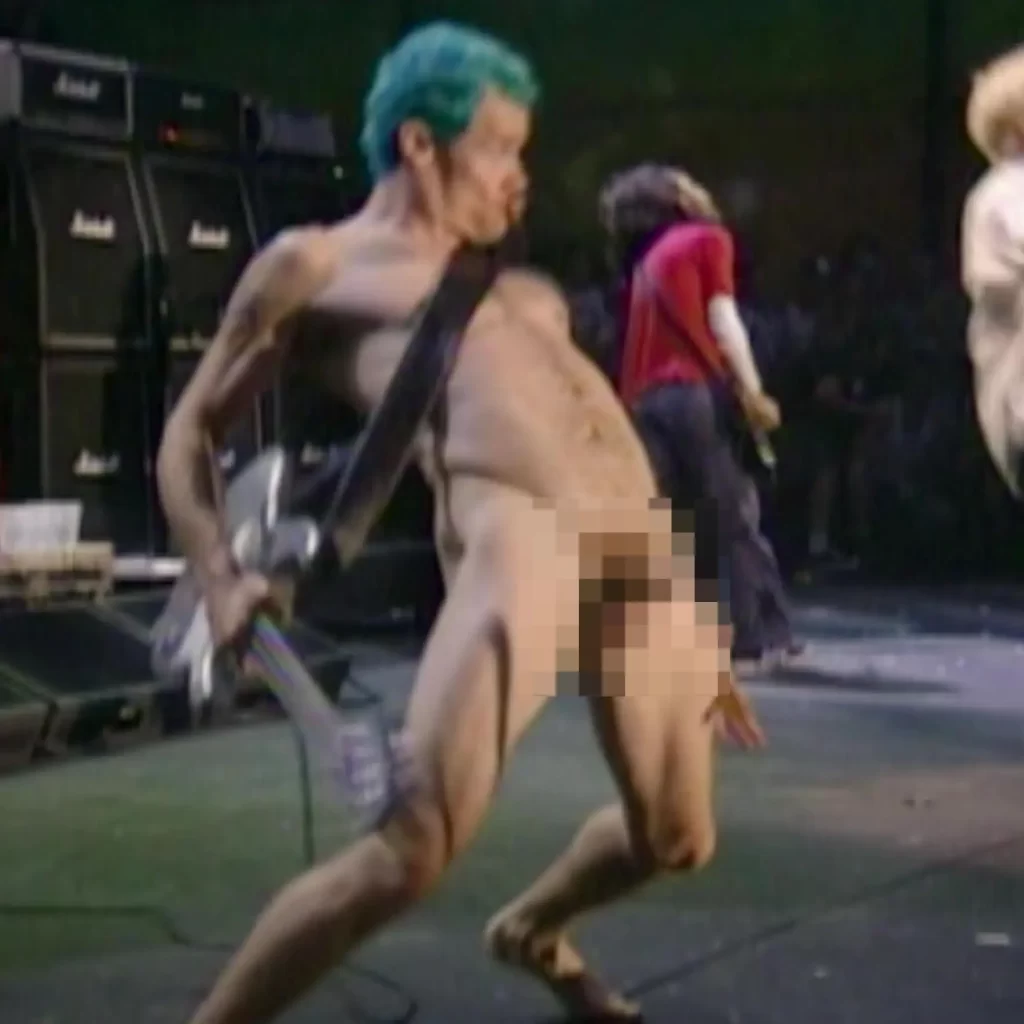
Flea from the Red Hot Chili Peppers naked on stage
Era / Genre: Funk Metal / Alternative Rock; 1980s–1990s
Career Context at the Time:
RHCP were notorious for their blend of funk, punk, and exhibitionism—a band that once played clubs wearing only strategically placed socks.
What Happened:
Flea performed nude or nearly nude at multiple shows, including Rockpalast (1985), Woodstock ’99, and various festival dates. Often he wore only a sock over his genitals. The band’s 1989 album Mother’s Milk also featured the band wrapped around a nude female model on the cover.
Agency & Intent:
Flea has described his nudity as rooted in personal freedom and childhood comfort with being unclothed: “I grew up running around naked. There’s a freedom inherent in it, a rebelliousness, that I find beautiful.” The band framed nudity as part of their artistic and anti-establishment identity rather than as calculated marketing.
Public & Industry Reaction:
Fans often embraced the silliness and liberation, though some venues and retailers balked at the Mother’s Milk cover. RHCP negotiated alternate artwork or shrink-wrapping to address retailer concerns.
Career Impact:
The nudity became part of their legend and did not impede their ascent; if anything, it sharpened their image as joyful degenerates.
Rage Against the Machine
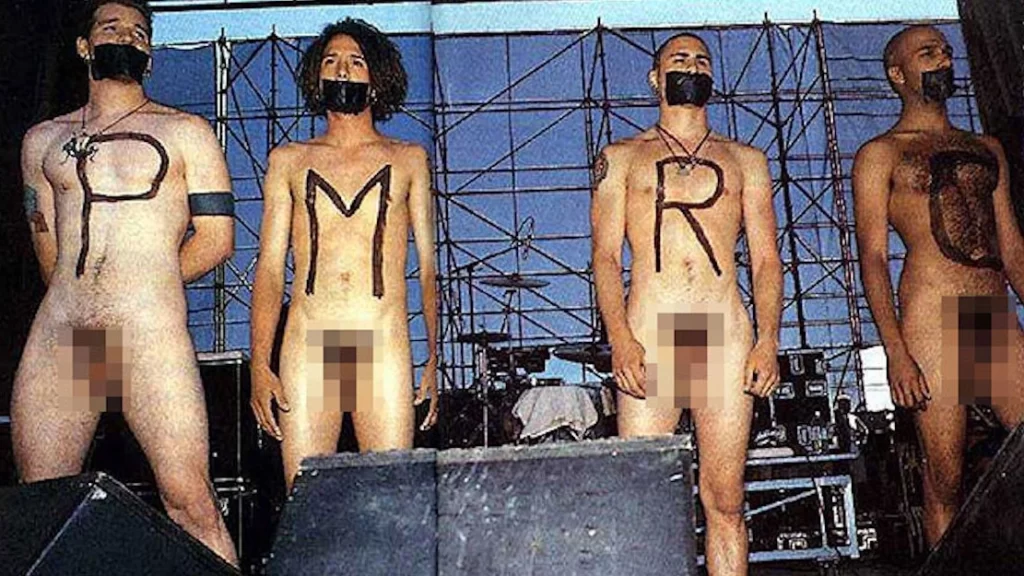
Rage Against the Machine, all four members, nude on stage with “P M R and C” painted on their chests
Era / Genre: Political Rap Metal; 1993
Career Context at the Time:
Rage were a rising force on the alternative and metal circuits, known as much for their politics as their music.
What Happened:
On July 18, 1993, at Lollapalooza in Philadelphia, the band walked onstage completely nude, with black tape over their mouths and the letters P-M-R-C painted across their chests. They stood in silence for about 15 minutes amidst feedback, then left without playing a note. The action was a protest against the Parents Music Resource Center (PMRC) and censorship.
Agency & Intent:
The band orchestrated the protest themselves as direct political theater. Nudity served as a literal and metaphorical exposure of the censorious forces they opposed.
Public & Industry Reaction:
Police intervened; organizers were unhappy; fans were bewildered. Yet the stunt has since been canonized as one of the most iconic political statements in rock performance history, frequently cited in retrospectives.
Career Impact:
The incident solidified Rage’s credibility as uncompromising activists and remains central to their mythology.
What these stories share is less about nudity itself than about control, context, and consequence. Peter Steele misread his audience. Kip Winger deferred to a publicist and paid for it in credibility. Rage Against the Machine wielded their bodies as a political blunt instrument and walked away legends. The same act—appearing nude in public—can be a punchline, a power move, a marketing stunt, or a genuine act of defiance, depending entirely on who’s doing it, why, and for whom. In a genre that has always trafficked in excess and provocation, these moments are telling precisely because they reveal where the performance ends and the person begins.
“`